Call Today: 1-800-890-2262

Ginsberg Law Offices

Social Media (Twitter, Facebook, MySpace): Friend or Foe?

Back in July, I posted a blog about how Facebook can potentially damage your Social Security Disability claim if information contained in your profile contradicts your disability claim and somehow gets in the wrong hands. But since there are many social media sites out there, I would like to elaborate on this topic so as to provide more comprehensive advice on the topic of whether social media is a friend or foe.

Never before in the history of technology has there been such an array of sources available for an individual to stay in contact with friends and family social mediafar and near.  One feature of social media sites like Twitter and Facebook that attracts millions of users per day is their short learning curve.  The simplicity of these sites coupled with the fact that these mediums are free to the public attracts record amounts of new signees daily, and there appears to be no signs of a recession in sight.  Although these type mediums are great tools in which to stay in contact or reunite with high school friends and distant family, a danger lurks within, which most users are either not aware of or simply take for granted.  A mistake concerning privacy control on either of these social network sites could be the deciding factor on whether a disability applicant will receive benefits or not.

Facebook, Twitter and MySpace share the same premise for social contact; however, these social forums differ in their rules and regulations.  Most of these sites are in real-time with postings denoting both a date and time for each post.  For instance, the popular sites of Facebook and MySpace provide its users with the ability to post an indefinite supply of pictures and comments to a user’s network or followers, while its rival, Twitter is limited to micro blogs, those postings confined to only 140 characters. Creating messages under such a restricted limit often causes posts of only quick thoughts.  Although most Twitter users voice frustration on being restricted to the mere 140 characters (spaces included), 140 characters unwisely utilized by “Jane Doe,” the social security applicant, could lead to irreparable harm and the demise of her disability application.  To show how a simple post on Twitter can go from fun to disaster with the click of button (less than two seconds), let us take a brief look at a sample tweet.  “Went on our family vacation, enjoyed synchronized swimming class at the hotel’s pool and walking around Disney World.  Great time!”  Although not a proper sentence, common to the Twitter world, this 116 character long tweet is the precursor for an impending disaster.  Yes, as a post, it sufficiently allowed followers to learn and have a glimpse of her recent travel; in the social security world, however, it could be considered a costly mistake. Continue reading →

Q & A: Who is responsible for calling upon and compensating the Medical Expert witness?

Hello and welcome to the 4th installment of my Q & A series, which is designed to cover some of the more elusive topics associated with the Social Security Disability claims process. In this post, I answer a question asked about the Medical Expert witness (ME).

Question:

I have a disability hearing scheduled for next month in my Multiple Sclerosis disability case. As I have been unable to work for over a year, I have limited financial resources. I have read that an Administrative Law Judge often solicits the testimony of a medical expert on complex medical issues. Here are my questions: Who is responsible for assuring that the medical expert testifies at my Social Security disability hearing? And who compensates the medical expert? Is there any responsibility on my part?

My answer:

This is a great question and one I have not actually been asked. You are correct that Judges (ALJs) often seek the testimony of medical expert witnesses (MEs) in complex medical situations like yours.  Since ALJ’s have no direct communication with medical professionals and are not medicallyMedical Expert Witness trained, testimony from medical experts provide ALJ’s with a more complete and detailed understanding of your medical and/or mental situation prior to his/her issuance of an opinion in your matter.
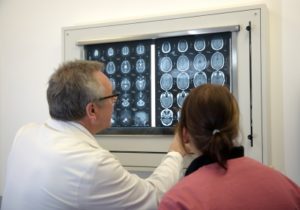
Here’s how it works: Each hearing office maintains a roster of medical experts who routinely testify as expert witnesses in disability hearings. If you spend enough time at any one Social Security hearing office, then you will likely start to notice the familiar faces of some of these medical experts, many of which are retired doctors who have a wealth of medical knowledge that can be used to help the judge make a well-informed decision.

Since the ALJ is the individual that solicits the expert’s opinion, the SSA incurs the costs of paying the medical expert. So in answer to your question, you are not responsible for compensating the ME. It is all taken care of by the SSA.

Also, since you are pursuing a Multiple Sclerosis disability claim, I would like to tell you and any one else interested that I have been working on a website dedicated solely to the topic of Multiple Sclerosis and Social Security Disability. Because I have seen a lot of MS disability claims over the years, I figured I would  share some tips and knowledge on the subject. Please visit the site by clicking on the link, and be sure to let me know what you think!

Q & A: What is the Definition of “Medically Determinable”?

Hello and welcome to the 3rd installment of my Q & A series, which is designed to cover some of the more elusive topics associated with the Social Security Disability claims process. In this post, I will discuss the term “medically determinable,” another one of those unique Social Security terms that people often have questions about.

Question:

I understand that in order to qualify for Social Security Disability benefits, my condition must be a medically determinable physical or mental impairment.  Can you explain exactly what a medically determinable physical or mental impairment is?

My answer:

The terminology or “lingo” used by the Social Security Administration is often confusing.  A medically determinable physical or mental impairment is an impairment that results from anatomical, physiological or psychological abnormalities which can be determined by medically acceptable clinical and laboratory diagnostic techniques.  In essence, a physical or mental impairment must be substantiated by medical evidence consisting or signs, symptoms and laboratory findings.   An applicant’s statement of symptoms alone is not enough to meet the requirements of a “medically determinable physical or mental impairment.”  In a nutshell: There must be medical evidence that substantiates the symptoms experienced.  For example, if you are experiencing debilitating migraine headaches, you need to have medical tests done in order to establish the root cause of the headaches.  Your saying alone that you have migraine headaches is not enough.

I cannot over emphasize the need for specialized medical and mental relatedMRI evidence test(s) in determining an individual’s impairment.  Although general physicians are skilled doctors and deserve all the accolades available, Social Security Disability applicants must seek, in addition to the opinions of a general physician, the opinions/diagnoses of specialists when making application for disability.  These specialized opinions are critical in order for an applicant to be awarded disability. Let’s quickly take the above example of someone suffering from debilitating migraine headaches. In their case, it would be wise to seek the opinion of a headache specialist or neurologist while pursuing their claim. On my migraine headaches and disability website, I posted an entire article about the benefit of seeking specialized treatment while pursuing a disability claim, which can be accessed by clicking on the link.

I understand that most applicants are unable to shoulder the costs of seeing a specialist and that most government-assisted programs do not cover these types of costs.  I encourage applicants to solicit the financial help of family members as well as explore other available means so that they are able to see a physician specializing in their medical condition.

Q & A: What is required for a child to qualify for benefits?

Last week I started a Q & A series designed to cover some more elusive topics related to Social Security Disability claims. In part 2 of this series, which follows, I briefly discuss the requirements that have to be met in order for children to qualify for Social Security Disability.

Question:

What are the requirements for a disabled child to qualify for Social Security disability Child SSIbenefits?

My answer:

As with adults, there are two Social Security disability programs available to disabled children: SSI and SSDI. They differ according to the child’s age.

Program #1: SSI (Supplemental Security Income)

Under the Supplemental Security Income (SSI) program, a child from birth to age 18 may receive monthly payments based on disability or blindness if he/she meets the following two requirements:

  • He/She has an impairment or combination of impairments that meets the SSA’s definition of disability which is defined as a “medically determinable physical or mental impairment or combination of impairments that causes marked or severe functional limitations and that can be expected to cause death or that has lasted or can be expected to last for a continuous period of not less than twelve months.”
  • The income and resources of the parents and the disabled child are within the allowed limits.

Program #2: SSDI (Social Security Disability Insurance)

Under the Social Security Disability Insurance (SSDI) program, an adult child, which is understood as a person age 18 or older, may receive monthly benefits based on disability or blindness if he/she meets the requirements stated below:

  • He or she has an impairment or combination of impairments that meets the definition of disability as stated above;
  • The disability began before age 22; and
  • The adult child’s parent worked long enough to be insured under Social Security and is receiving retirement or disability benefits or is deceased.

It is important to note that a common thread to both of these programs is that the child at issue must not be doing any substantial work.

Q & A: Do I qualify for SSDI?

I have selected some questions that have recently been asked of me that I believe cover some more elusive topics related to Social Security Disability that I believe are worth discussing on this blog. This first topic, while not necessarily as elusive as the others – which I will post weekly as a Q & A series – is a good start since it involves a person who is just starting to explore the world of Social Security Disability. Someone with recent injuries poses the following Question:

I was recently in a car accident and required extensive surgery on my leg to replace several broken bones.  I currently require the assistance of either crutches or a walker in order to be mobile.

In addition, I have begun having problems with blurred vision and migraine type headaches.  I have an appointment with a specialist later this month to address these symptoms.

I have taken a twelve-week leave of absence from my job, which requires that I stand 95% of an 8-hour shift.  Do I qualify for Social Security disability?

My answer:

No, not yet.  The law that governs Social Security Disability defines disability as “the inability to engage in any substantial gainful activity by reason of any medically determinable physical or mental impairments which can be expected to result in death or which have lasted or are expected to last for a broken leg resulting from car accidentcontinuous period of not less than twelve months.”

As it stands, it is not conclusive that your medical conditions are expected to either result in your death or last for twelve months or more.  Because of this, you would not qualify for disability benefits at this time.  However, this is based solely on your broken leg as the chief medical condition.  Test results and medical opinions are still pending in regards to the blurred vision and headaches that you are currently experiencing.  It is important that you see a doctor (perhaps a neurologist) that specializes in headaches.  Depending upon his/her medical opinion, you may be eligible to apply for Social Security Disability – especially if it is determined that these conditions will continue indefinitely and continue to impair your work performance.

But if your headaches and blurred vision are only temporary problems associated with your recent leg injury, and it is determined that they will subside with time, then you will not meet Social Security’s firm requirements. A broken limb is typically not enough to keep you out of work for 12 months or more.

Top