Why does Social Security make it so difficult to qualify for SSDI benefits due to PTSD and what do you really need to win?
I have represented hundreds of clients in PTSD cases – some are military veterans who served our country in Iraq, Afghanistan, Bosnia and many other places. Their PTSD often arises from seeing bombs explode nearby, seeing fellow soldiers or civilians killed by roadside bombs, or sometimes just living for months under unrelenting stress, never knowing from one minute to the next whether your life will be at risk.
Other PTSD cases arise from sexual abuse, physical abuse, and emotional abuse from childhood or from a previous relationship or even a toxic work environment.
Still other PTSD cases arise from severe emotional trauma like losing a child or a spouse to violence or an accident.
I have written about this issue before but, given the stress of the coronavirus pandemic, I think this question deserves another look because just about every case evaluation I see contains allegations of some mental health concern.
I suspect we will be dealing with the repercussions of Covid-19 for years. In Atlanta, where I live, it seems that every night we see news stories of road rage shootings and other violent crimes.
Entire sectors of the economy have been devastated, causing upheavals in the job markets. How many restaurants have closed over the past year? How many men and women in the hospitality, tourism or travel industries are out of work? And for those who remained employed, many had to adjust to working from home while balancing child care and school-from-home obligations.
It is certainly no wonder that daily stress – whether financial, interpersonal or otherwise – has resulted in more cases of clinical depression and anxiety disorders. Hardworking men and women who might have been struggling with depression or social anxiety but was “getting by” now find the pressure of adapting to a post-pandemic world simply too much.
Here is some of what I see from potential clients in case evaluation requests:
“I cannot physically, mentally and at times emotionally work more than a few hours a week. I have noise intolerance with voices, music, and sounds, especially higher pitches. I have to wear noise cancelling ear phones and they don’t fully help. I cry at times from overstimulation which could be even from thinking, planning or riding in a vehicle. I cannot drive.”
“I have severe depression and anxiety and I can no longer focus on my work. And I had suicidal thoughts I am writing this right now it is 4:35 in the morning. I don’t sleep and I am taking antidepressants like mirtazapine 45 mg and am always sleepy and tired.”Continue reading →
What if you’re 26 but have Scoliosis mixed with Osteoporosis? My back looks like the hunchback of notre dame. My doctor even told me I’d never be able to work a regular job, but that’s been since highschool and my backs got worse. Can I not show the judge how bad my back hunches over? Because clearly they can see I’m disabled if they just saw my back.
Jonathan’s response: I think you should not rely on showing the judge how bad your back hunches over. Your chances of winning disability are much greater if your medical record and opinion evidence from your doctors addresses how your scoliosis and osteoporosis impact your capacity for work.
First, keep in mind that Social Security is not scheduling live hearings at this point. We may go back to in person hearings at some point in 2021 but there will be a backlog and you are likely to wait a very long time to actually appear before a judge. Currently, all SSD hearings are being conducted by telephone. Some judges are starting to hear cases using video (you, as the claimant, would be appearing using your smart phone) but I suspect that the severity of your medical issues would not come through on video like it would in a live hearing. Continue reading →
Can you win Social Security disability benefits based on a mental health issue like PTSD, anxiety, depression or bipolar disorder if the only records in your case file are VA (Veterans Administration) medical notes?
My experience over the past few years has been that you can win Social Security disability for mental health claims using VA records but it is becoming increasingly difficult to win benefits with only VA records. This is true even in the case of veterans who have a 100% service connected VA disability rating.
VA Disability Ratings Are Not Binding on Social Security
I have always found it odd that a VA disability determination is not binding at all on the Social Security Administration. VA disability is different from Social Security in that the VA system issues ratings in percentages whereas Social Security is “all or nothing.” You can have a 70% VA rating but there is no equivalent in Social Security – either you are 100% disabled or you are not disabled at all.
You may be frustrated and disappointed that your 100% VA disability rating is not binding in any way on Social Security in disability determinations.’
I fully understand the frustration of military veterans who are struggling with PTSD, depression, anxiety and perhaps a variety of physical problems who cannot understand why they have to go through another disability adjudication process after they have fought the VA for months or years. Continue reading →
If you are pursuing Social Security disability benefits and your primary impairment is depression, you will need more and stronger evidence to win your case.
Over the past few years I have noticed a trend in my law practice whereby judges are less likely to award benefits in depression cases unless your medical record contains evidence of suicide attempts, in-patient psychiatric hospitalizations or other symptoms that could be life threatening.
Unlike medical conditions like back pain arising from a herniated disc, irritable bowel syndrome associated with a diseased colon, cancer that requires surgery, radiation and chemotherapy, or blood clots that require you to keep your legs elevated, severe depression cannot be imaged using an MRI, CT scan or ultrasound. Psychologists and psychiatrists test for depression based on conversations with patients and their long term relationships with their patients. Continue reading →
Most people applying for Social Security disability have some sort of firm diagnosis. For example, if you have back problems, your doctor may have shown you an MRI report documenting a herniated or bulging disc. If you have heart issues you may have been diagnosed with congestive heart failure or coronary artery disease. And if you struggle with mental health problems, you may have been diagnosed as being bi-polar, or having PTSD, or anxiety disorder.
When you get to your hearing, however, you should not rely on these labels as you explain to the judge why you contend that you no longer have the capacity for “substantial gainful activity” (i.e., work).
First, understand that many times the label used by one doctor might be different than that used by another. In my practice, for example, I frequently represent clients with mental health issues who have been diagnosed with depression, anxiety, PTSD, and/or bi-polar disorder – all by different physicians or psychologists. One medical provider may choose the label “depression” while a second doctor may choose the label “bi-polar.”
Similarly, I have seen multiple doctors read the same MRI report and come to different conclusions. One doctor may see a herniation, while another may see a bulge or an extrusion. Continue reading →
Recently a young man wrote me to ask my opinion about whether he qualifies for some form of Social Security disability. In his very thoughtful email he asks a number of questions that I suspect a lot of folks are wondering about.
After practicing in this area of law for 20+ years I can generally sense fairly quickly whether someone has a viable case. In my last blog post I discussed what I look for generally in a mental health disability claim. So now I thought I would explain – step by step – how I analyze potential client inquiries using this case as an example.
Obviously I will not use this gentleman’s real name and I will change the facts a little to preserve his anonymity. Continue reading →
You probably would not be surprised to discover that the most common impairment cited by Social Security disability applicants involves back pain. Because disability adjudicators and judges see so many back pain cases, you cannot simply walk into a disability hearing and testify that your back really hurts and that you cannot lift very much, walk very far, or sit very long, and expect to win.
Instead, Social Security disability judges expect to see evidence in the form of diagnostic test results (such as an MRI or CT scan), treatment notes from one or more physicians – ideally specialists – dating back months or years, evidence that conservative treatment like physical therapy or epidural injections have failed, and evidence that you are either a surgical candidate or that you have been referred for long term pain management.
In addition to evidence related to your back pain, Social Security judges look at evidence about other conditions such as depression, anxiety, diabetes, heart problems, and non-medical factors like your age, education, and work history.
Because so many folks have questions about back pain disability cases, I thought it would be helpful to describe the types of musculoskeletal pain cases that are getting approved at the end of 2017 and into 2018, and which types of cases are not being approved. Continue reading →
WXIA TV in Atlanta recently ran a story about a 53 year old U.S. Navy veteran who was approved for VA benefits but denied for Social Security. Retired Navy vet Daniel Norfleat from Covington, Georgia was deemed 90% disabled and unemployable by the VA for PTSD, a heart attack, a stroke and knee surgeries. Mr. Norfleat applied for Social Security disability and was approved, but SSA changed his onset date.
Norfleat appealed and his case went before a Social Security administrative law judge. The ALJ not only refused to change the onset date but she reversed the finding of disability entirely and ruled that Mr. Norfleat has the capacity to work at a full time job. This despite opinions to the contrary from 15 different doctors and prescriptions for 24 pills a day for pain, depression and insomnia.
Under new rules released by Social Security, their judge no longer has to explain why she disagrees with the VA’s decision. These new rules also provide that Social Security no longer has to give controlling weight to opinions about employability issued by treating physicians. See my video here about these new evidentiary rules. Continue reading →
Over the last few months, I have represented ten different clients claiming disability based on irritable bowel or inflammatory bowel diseases and every one of these cases was approved. My experience has been that disability judges recognize how IBS or IBD can significantly impact your ability get through a workday and thus preclude reliable work.
Since the main issue in any SSDI or SSI claim asks whether you have the capacity to reliably perform even a simple, entry-level job, medical issues that impact reliability will be considered disabling.
In irritable bowel or inflammatory bowel diseases like Crohn’s disease, ulcerative colitis, schistosomiasis, and amebic colitis cause work performance problems such as:
need to take frequent unscheduled restroom breaks
unscheduled time away from work station to use the restroomneed for a work station near and always open restroom
gastric pain that interferes with attention and concentration
 I have written about this issue
 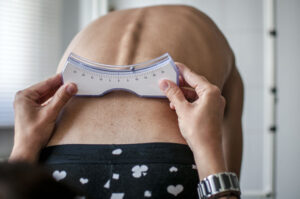 osis? My back looks like the hunchback of notre dame. My doctor even told me I’d never be able to work a regular job, but that’s been since highschool and my backs got worse. Can I not show the judge how bad my back hunches over? Because clearly they can see I’m disabled if they just saw my back.
 Because so many folks have questions about back pain disability cases, I thought it would be helpful to describe the types of musculoskeletal pain cases that are getting approved at the end of 2017 and into 2018, and which types of cases are not being approved.