Call Today: 1-800-890-2262

Understanding the Social Security Disability “System”

My colleague, San Francisco California Social Security disability attorney Geri Kahn, publishes an interesting and thoughtful Social Security disability blog that I read regularly.   This past April, she published a post that should be required reading for all disability applicants.  Entitled “Four Misconceptions About the Social Security System,” Geri succinctly discusses several issues that lead to a great deal of frustration for both claimants and their attorneys.

One of the points Geri discusses really resonates with me.   She answers the question “I have back pain and cannot work so why do you recommend that I see a psychiatrist?”

Great question.

chronic pain, depression and disabilityFor years, my practice has been to add an allegation of depression and/or anxiety to every Social Security appeal I file.  In my view it would be extraordinary if anyone with a history of regular work would not be depressed and anxious if he/she:

  • no longer has a regular work routine
  • experiences financial pressure because of lack of income
  • feels a sense of worthlessness because he/she can no longer contribute (this is especially true for men)
  • recognizes that he/she will not be able to engage in social, athletic and recreational activities at pre-impairment levels
  • has to deal with stress and anxiety inherent to anyone with chronic pain
  • has to deal with disrupted and sometimes damaged family relationships
  • has to deal with physical and emotional changes associated with strong pain medications
  • experiences new medical issues associated with his/her chronic medical condition (i.e., obesity, constipation, high cholesterol, etc.)

As a disability claimant, you may not even realize the impact your back condition has had on your life.  As attorneys, we look at you as a whole person to understand more fully why you can no longer work.   Not only will such a more expansive view of your damaged health benefit your case, it may help you better understand what you are going through as well.

Multiple Sclerosis Patient Seeks Strategy to Win SSDI Case Early

Here is a question I received from a multiple sclerosis patient who is preparing to apply for Social Security disability and is hoping to win her case early.

Jonathan,
First, I want to thank you for putting valuable information about the SSDI process online. I was diagnosed with MS in 1993. I recently left work on an early disability retirement after a 24 year career with the State of ABC.  My question is this – if I have MS and my medical records document cognitive dysfunction, isn’t it feasible that I would be approved with my initial application to SS? Although I did very well in the beginning of the journey, as I have gotten older, (I’m only 44), my disease has started progressing over the last few years. Will the fact that I have taken an early disability retirement from the state weigh favorably towards my case?

Here are my thoughts: the first question I would ask is “are you insured for Title II Social Security disability?”  In some states, employees do not contribute into the Social Security system- instead, they contribute to a state disability program.  For example, I sometimes get calls from teachers who may have worked for years, but who are not insured for Title II Cognitive dysfunction associated with multiple sclerosisdisability because their school system opted out of Social Security.  If you cannot tell from looking at an old paystub, I would advise you to contact your human resources office to confirm that you have been making payments into the Social Security system.    You can also call Social Security at 800-772-1213 to inquire as to whether you have been earning credits.  You can also request an earnings and benefit statement (Form 7004) from Social Security directly.

If you are not insured for Title II SSDI, then you might still be eligible for SSI, but that will depend on household income and the value of assets that you own.

Assuming you are eligible for Title II disability, your best chance at an early approval would be to request help from your treating doctor to show that you meet or equal the multiple sclerosis listing, which is found at  Listing 11.09.   When you read this listing, it does refer to cognitive issues by referring to Listing 12.02 which describes “organic mental disorders.”

I would print out the entire Multiple Sclerosis listing and the listings referenced in 11.09 and take the printout to your doctor’s office.  If your doctor or someone in his office is willing to write a narrative report describing your symptoms, course of treatment and state that your symptoms meet or equal what is contained in the listing, you greatly improve your chances at an early decision.  Your doctor should track the language of the listing as closely as possible, using the language of the listing wherever possible.   Further, since the disabling symptom you describe has to do with cognitive dysfunction, you may need to have a psychiatrist or a neuropsychologist evaluate you and write a narrative report that tracks Listing 12.02.

I take a similar approach when I am representing an MS client – although instead of a narrative report, I create a checklist for the doctor to complete and submit that to the Social Security judge along with copies of all medical records.  Often times, by the way, Social Security will provide the neuropsychological exam as a “consultative evaluation” that they pay for, however, if you can provide your own, you obviously  have more control of the process. Continue reading →

Can Child Claim Auxiliary Benefits if Disabled Parent Refuses to Apply?

I regularly receive questions about auxiliary Social Security disability benefits.   Often these questions are from divorced persons who are struggling with the cost of raising a child, while the disabled, non-custodial parent has not been cooperative with regard to auxiliary benefits.

Recently I received the following question:

i have a 15 yr old son. my ex husband is dying of cancer. he has not applied for ss , so i was told by ss that i cannot apply until my ex does. in the meantime we r struggling. help. -S

Here is my response:  unfortunately, there is nothing that S can do unless and until her ex-husband applies for disability benefits.  Cancer is a listing level impairment and my experience has been that SSA adjudicators and judges are more likely than not willing to grant benefits.   Further, some cancers are included in Social Security’s compassionate allowance program.  Even if the cancer is treatable, the treatment protocol often lasts 12 months or longer, so a cancer claimant can usually get a closed period even if on-going benefits are not awarded. Continue reading →

The importance of doctor support in a disability claim (and why this is the case)

Doctors play a pivotal role in the social security disability process. Their contributions of expertise and documentation provide insight to an applicant’s mental and/or physical condition, and this insight may prove useful when a social security adjudicator is reviewing a claimant’s file. In essence, what a doctor’s contributions to a claimant’s disability file can influence the ultimate decision made by the Social Security Administrative Law Judge. For this reason, it is often said that medical records and documentation are the backbone of a successful disability claim, but in this post we look beyond that to discuss the logic of why a doctor’s opinions are so important.

Imagine you have a condition like migraine headaches, and you are trying to win disability benefits. Well, in this case, it may be difficult to prove something like migraines can prevent you from working. This is where the doctor comes in to save the day. If you are able to see some kind of migraine specialist or neurologist whose office notes from your visits illustrate the severity of your migraines, you are that much closer to winning your disability claim. This is why it is always recommended that you seek the services of a doctor who specializes in your condition, whatever that condition may be. A specialist’s notes may be seen by the SSA as even more credible and as stronger evidence backing up your claim.

Cardiologists, rheumatologists, neurologists and orthopedic surgeons are examples of those physicians who specialize in certain areas of medicine, and such specialty doctors should definitely be consulted with over the course of your claim. They can provide certain testing, are knowledgeable of certain procedures, and have the right skills to render a better diagnosis of your condition and judgment of how it impacts your ability to work. Having that firm diagnosis of a condition and backup from a doctor can prove so valuable in your case.

Another reason doctors play an important role in disability claims is probably because of the strict standards doctors operate under today. I read an interesting article in the Chattanooga Times Free Press, dated April 7, 2010, which is titled Doctors face board specialty ‘expiration dates’ and which discusses just how strict the standards are today for practicing doctors. The article states that prior to the 1990s, doctors who had received specialized training in certain areas were only required to obtain certification ONCE. There were no additional requirements for retesting. In essence, once a doctor was certified, he or she was certified for the duration of his or her practice. Now, however, doctors constantly face the requirement of having to take tests and participate in continuing education to renew their board certification.

This seems like good news for the disability claimant, not just because doctors are held to higher standards, but because the work and opinions of doctors are highly regarded by the SSA. Social Security Judges certainly seem to put a premium on quality medical records. But aside from that, just knowing our doctors’ skills are up to date is a reassuring factor.

To sum up, doctor support is very important in a disability claim, and this is especially the case when it comes to board-certified specialists. Their diagnoses and treatment plans not only can speed up a disability process, but also can assist in winning one as well.

Diabetes and Social Security Disability Case Study Posted

This afternoon, I tried an SSDI case involving a 53 year old woman claiming disability based on diabetes and associated complications.  In reviewing the record it appears to me that my client had been diabetic for several years prior to her diagnosis and has most likely suffered permanent vision and nerve damage.  Unfortunately her medical care has been suboptimal and while she has been compliant with treatment the record does not contain enough for me to make an argument based on the listing at 9.08.  Instead I went with a functional capacity argument.

You can read the case study on my Georgia Social Security disability web site.

Helpful Tips for the Disability Claimant: Knowing How To Describe Pain

In a recent post on the importance of claimant credibility, I made a point that your ability to effectively describe your physical pain at the hearing may play a role in helping you win your case. Since physical pain is common to many disability cases, I want to elaborate on this point. Not only should you be able to effectively describe your pain at the hearing, but also throughout the claims process and during doctor’s visits as well.

Pain is subjective and can be hard to describe

All individuals have experienced some degree of pain at some point throughout life. The intensity of pain can range from a dull headache, to an agonizing toothache, to the more severe type of pain commonly associated with chronic conditions such as migraine headaches, Fibromyalgia, and Reflex Sympathetic Dystrophy (RSD). Although pain is a symptom and we easily recognize it when we experience it, pain is nevertheless hard to describe. Fellow Blogger Tomasz Stasiuk, whose Colorado Social Security Disability Blog contains a wealth of information about the disability claims process, made note of this fact in his December 2009 article on how to describe pain in a Social Security Disability case.

As Thomas suggests, pain can be hard to describe because 1) it is subjective and cannot be felt by others and 2) it is not a visible condition. Thus, a judge assigned to your case may not fully understand the extent your pain if you merely state you have pain. Stating you have pain is not enough;  in order to strengthen your chances of winning your disability case, you must learn how to effectively describe your physical pain so that the caseworkers, physicians, and even the ALJ (Administrative Law Judge) assigned to your case can understand what you experience each day and how your pain limits your functioning.

Your ability to effectively describe your pain to your doctors is also important. This is because their reports and records will be evaluated by the SSA.  I have seen many medical records where during an office visit, a client replied only by saying “Fine” after being asked by the doctor “How are you doing?” In such cases, the client’s chart might reflect something like: “Patient stated that she is doing fine today.” The word “fine” does not win a social security disability case. In fact, some adjudicators will often seize on something like this to justify denying a claim. Choose your words cautiously – even while at the doctor – especially if your words relate to describing how you are feeling.

Tips on how to effectively describe your pain

As mentioned above, fellow blogger Tomasz Stasiuk has written on this topic as well and has offered some great tips on how to effectively describe pain in a disability case.  Because his tips are so useful, I am republishing them here (with minor additions) for your convenience. The following are some guidelines suggested by Tomasz Stasiuk to help claimants be able to effectively describe their pain.

Nature of the pain: What is the pain like? Is it sharp or dull? Is the pain aching, shooting or throbbing? Does the pain burn? Is it a constant ache that progresses to spasms as it evolves? On a scale from one-to-ten, how does your pain rate?

Location: Where is the pain physically located on your body?

Frequency and Duration: It is painful all the time or just some of the time? How long does the pain last? Do you feel better in the morning? Alternatively, does it start bad in the morning and continue to worsen until you go to bed?

Triggers: What events trigger your pain, if any? Do events such as walking result in pain? Does looking at a computer screen for an extended period of time result in migraine headaches?

Effects of pain: Does the pain affect how much you can lift? Does the pain affect your ability to interact with your children or spouse? How long can you sit, stand or walk? Does your pain affect your ability to read any type of written correspondence, whether it be a book or letter?

Effects of medications: Do your medicines help? Does the pill or injections relieve all of the pain or just some of the pain? What do the medications help with? What pain does the medication not relieve?

Keeping a journal of your symptoms and pain may be useful

Again, pain must be described in other words than by just saying “I hurt.” As noted in earlier posts, keep a journal handy and write down your daily symptoms and experiences with pain. Something like: “A day in the life of X (your name).” It does not have to be in some fancy, formal writing style. Notes jotted down are just fine. Be sure to include things such as pain level, daily limitations, and medicines taken (and side effects). It can be hard to remember on your own how you feel each day. The disability process is long and enduring. Do yourself a favor and start journaling today.

Q & A: What medical sources are considered acceptable by the SSA?

Hello and welcome to the 7th installment of my Q & A series, which is designed to cover some of the more elusive topics associated with the Social Security Disability claims process. In this post, I discuss what types of medical providers are deemed as “acceptable medical sources” by the Social Security Administration.

Question:

I recently applied for SSDI, and I want to make sure that the medical records I am providing to the SSA are from “acceptable medical sources.” Can you explain in detail what the SSA views as an acceptable medical source?

My answer:

The SSA considers an “acceptable medical source” to be any licensed physician (this includes D.O.s – Doctors of Osteopathic Medicine), licensed or certified psychologists, licensed optometrists, hospitals, clinics, and other health facilities where a claimant has been treated.

Remember, as has been previously mentioned on this blog, claimants are highly encouraged to see a physician/specialist who focuses primarily on their specific impairment. In a previous post about the importance of seeking specialized medical treatment,  for example, an individual suffering from migraine headaches and blurred vision was advised to see a headache specialist or neurologist who could substantiate their claim.

While general physicians are very knowledgeable and skilled (and are deemed to be an appropriate medical source by the SSA), I typically encourage my clients to try and see a specialist whose practice concentrates primarily on their particular impairment. These specialists will have the proper credentials, testing methods, and treatment plans for you, and your seeking their help will only serve to make your claim more credible in the eyes of the SSA.

I would like to address one last question I sometimes get from people suffering from a physical impairment like back  or neck pain. Many such claimants will see a chiropractor instead of, say, a spine specialist. Not to take away from the benefits chiropractors provide, but in my experience chiropractic records are not nearly as useful in a disability claim as compared to records from orthopedic and spine specialists or even those of D.O.s. If you are seeing a chiropractor, my best advice is to also seek a diagnosis or opinion from another type of medical source, so that you will be satisfying the SSA’s “acceptable medical source” requirements.

If I Stop Working and File for Disability, How Do I Know that my Money Won’t Run Out Before my Case is Approved?

I have written extensively on this blog about the claim processing delays that continue to plague Social Security disability.  I suspect that there are a lot of folks out there who are suffering and struggling trying to stay at work, perhaps at the expense of their health, because they are concerned that if they stop working, they will run out of savings before their case is decided.  I recently received the following question from a gentleman named Steve who is fighting diabetes and diabetic complications and who finds himself with this quandary:

I am a 43 year old diabetic. I was diagnosed 7 years ago and progressed quickly from pills to insulin injections and have now been on an insulin pump for 3 years.  I have neuropathy in both legs, heart disease, and many other diabetic problems, because of high blood sugar.  I am at an ideal weight of 170 Lbs. and 5′ 9″ height and have always been active and try to eat healthy.   I take 40-50 units of insulin each day, but my A1C readings are still 10+. I am no longer able to perform my work assignments.  My employer (25years)had even allowed me to change to an office job but I am still not able to sit for over an hour without my legs hurting and I have had many hypo (low-sugar) episodes at work which scared everyone.  My doctor’s have suggested that I quit so that I can concentrate on this disease before it kills me, but the stories of possible delays in SSDI have really concerned me and my family.  I have enough money saved to survive for a year, but that is it.  Do you think someone like me would qualify for SSDI benefits, and what would a potential wait be?

Here are my thoughts: I think that Steve has very good reason to be concerned.  When you apply for benefits, there are two times when you are likely to be approved – at the initial application stage, which will be within four to six months after application, or at the hearing stage, which could be two to three years after application.

diabetes1Initial application approvals are almost always arise in cases that meet a listing.  Steve is a diabetic and the applicable listing is at Listing 9.08. State Agency adjudicators will approve diabetes cases on the listings but they will expect the medical records to document as many of the following complications:

  • long standing neuropathy (numbness in extremities)
  • long standing retinopathy (vision issues)
  • blood sugar readings at 200 or higher over an extended period of time despite increasing dosages of insulin
  • organ damage (documented by abnormal lab readings)
  • frequent urination
  • sexual dysfunction
  • statement or checklist from treating doctor that condition equals 9.08

In my view, you need to aggressively argue to the adjudicator that your case meets a listing – do not assume that the adjudicator will figure it out.

If your case is denied at the initial application stage, it is very unlikely that a different adjudicator will approve it at reconsideration.  Statistics I have seen suggest that no more than 10 to 15% of cases are approved at the reconsideration appeal level. Continue reading →

Q & A: Who is responsible for calling upon and compensating the Medical Expert witness?

Hello and welcome to the 4th installment of my Q & A series, which is designed to cover some of the more elusive topics associated with the Social Security Disability claims process. In this post, I answer a question asked about the Medical Expert witness (ME).

Question:

I have a disability hearing scheduled for next month in my Multiple Sclerosis disability case. As I have been unable to work for over a year, I have limited financial resources. I have read that an Administrative Law Judge often solicits the testimony of a medical expert on complex medical issues. Here are my questions: Who is responsible for assuring that the medical expert testifies at my Social Security disability hearing? And who compensates the medical expert? Is there any responsibility on my part?

My answer:

This is a great question and one I have not actually been asked. You are correct that Judges (ALJs) often seek the testimony of medical expert witnesses (MEs) in complex medical situations like yours.  Since ALJ’s have no direct communication with medical professionals and are not medicallyMedical Expert Witness trained, testimony from medical experts provide ALJ’s with a more complete and detailed understanding of your medical and/or mental situation prior to his/her issuance of an opinion in your matter.
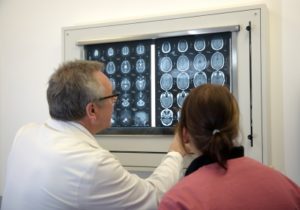
Here’s how it works: Each hearing office maintains a roster of medical experts who routinely testify as expert witnesses in disability hearings. If you spend enough time at any one Social Security hearing office, then you will likely start to notice the familiar faces of some of these medical experts, many of which are retired doctors who have a wealth of medical knowledge that can be used to help the judge make a well-informed decision.

Since the ALJ is the individual that solicits the expert’s opinion, the SSA incurs the costs of paying the medical expert. So in answer to your question, you are not responsible for compensating the ME. It is all taken care of by the SSA.

Also, since you are pursuing a Multiple Sclerosis disability claim, I would like to tell you and any one else interested that I have been working on a website dedicated solely to the topic of Multiple Sclerosis and Social Security Disability. Because I have seen a lot of MS disability claims over the years, I figured I would  share some tips and knowledge on the subject. Please visit the site by clicking on the link, and be sure to let me know what you think!

Q & A: What is the Definition of “Medically Determinable”?

Hello and welcome to the 3rd installment of my Q & A series, which is designed to cover some of the more elusive topics associated with the Social Security Disability claims process. In this post, I will discuss the term “medically determinable,” another one of those unique Social Security terms that people often have questions about.

Question:

I understand that in order to qualify for Social Security Disability benefits, my condition must be a medically determinable physical or mental impairment.  Can you explain exactly what a medically determinable physical or mental impairment is?

My answer:

The terminology or “lingo” used by the Social Security Administration is often confusing.  A medically determinable physical or mental impairment is an impairment that results from anatomical, physiological or psychological abnormalities which can be determined by medically acceptable clinical and laboratory diagnostic techniques.  In essence, a physical or mental impairment must be substantiated by medical evidence consisting or signs, symptoms and laboratory findings.   An applicant’s statement of symptoms alone is not enough to meet the requirements of a “medically determinable physical or mental impairment.”  In a nutshell: There must be medical evidence that substantiates the symptoms experienced.  For example, if you are experiencing debilitating migraine headaches, you need to have medical tests done in order to establish the root cause of the headaches.  Your saying alone that you have migraine headaches is not enough.

I cannot over emphasize the need for specialized medical and mental relatedMRI evidence test(s) in determining an individual’s impairment.  Although general physicians are skilled doctors and deserve all the accolades available, Social Security Disability applicants must seek, in addition to the opinions of a general physician, the opinions/diagnoses of specialists when making application for disability.  These specialized opinions are critical in order for an applicant to be awarded disability. Let’s quickly take the above example of someone suffering from debilitating migraine headaches. In their case, it would be wise to seek the opinion of a headache specialist or neurologist while pursuing their claim. On my migraine headaches and disability website, I posted an entire article about the benefit of seeking specialized treatment while pursuing a disability claim, which can be accessed by clicking on the link.

I understand that most applicants are unable to shoulder the costs of seeing a specialist and that most government-assisted programs do not cover these types of costs.  I encourage applicants to solicit the financial help of family members as well as explore other available means so that they are able to see a physician specializing in their medical condition.

Top